My interdisciplinary work involves facilitating multi-stakeholder communication with the goal of improved knowledge exchange and management of social-ecological systems. Below I describe two projects that address the process of community learning.
Integrating ecosystem and socioeconomic information into fisheries management
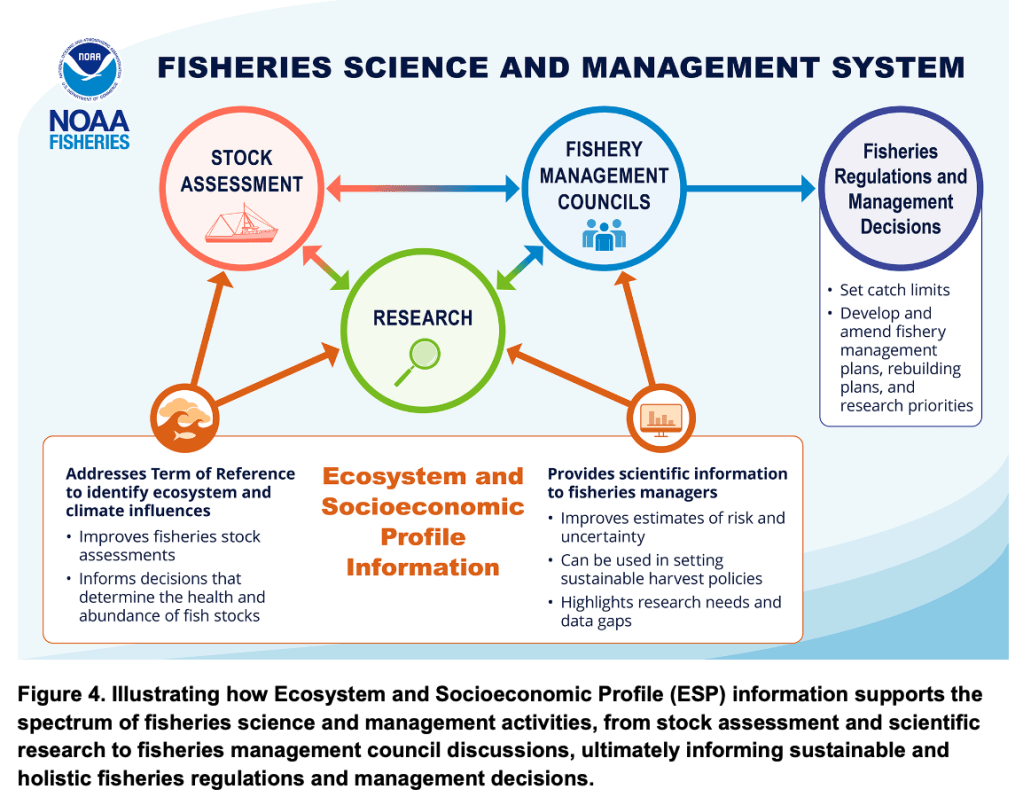
I facilitated a 2-day workshop (May 2024) hosted by NOAA fisheries on integrating ecosystem and socioeconomic information into fisheries management. This workshop included panels and group discussions across sectors on this topic! I used my biology education research background to design the workshop with our team as an interactive and participatory experience for all participants.
Check out the technical memorandum:
Climate-related community learning
The health and wellbeing of many communities is inextricably linked to the ocean and must adjust to fluctuations in weather and climate. Our graduate student cohort (UW Program on Climate Change) developed a project in collaboration with the Pacific Resources for Education and Learning (PREL), Pohnpei Teachers Learning Community (PTLC). We learned about the role of elementary school teachers in information exchange within the local climate knowledge network. 1) We identified and interviewed community members, including local environmental experts, community leaders, and resource managers. 2) We facilitated a 2-day teacher workshops in 2016 and 2017 that included a community forum and educational activities that the teachers could use with their students and developed a series of demo videos.
In most years the island Pohnpei in Micronesia (FSM) has high rainfall, but strong El Niño events cause severe drought on the island. These events happen infrequently – every ~13 years – but are forecast up to 3 months in advance and are well known by local environmental experts, community leaders, and resource managers. During the strong El Niño event in 2015-2016, a drought took many people by surprise and water resources were depleted quickly on the island. We learned about how drought and climate was communicated within the local community, and the role of teachers in this exchange of knowledge. Here is the paper (Bolden, Seroy, Roberts et al. 2018 Climate Risk Management)
Outreach at the aquarium

Image from: Bolden, Seroy, Roberts, et al. (2018) doi.org/10.1016/j.crm.2018.04.004
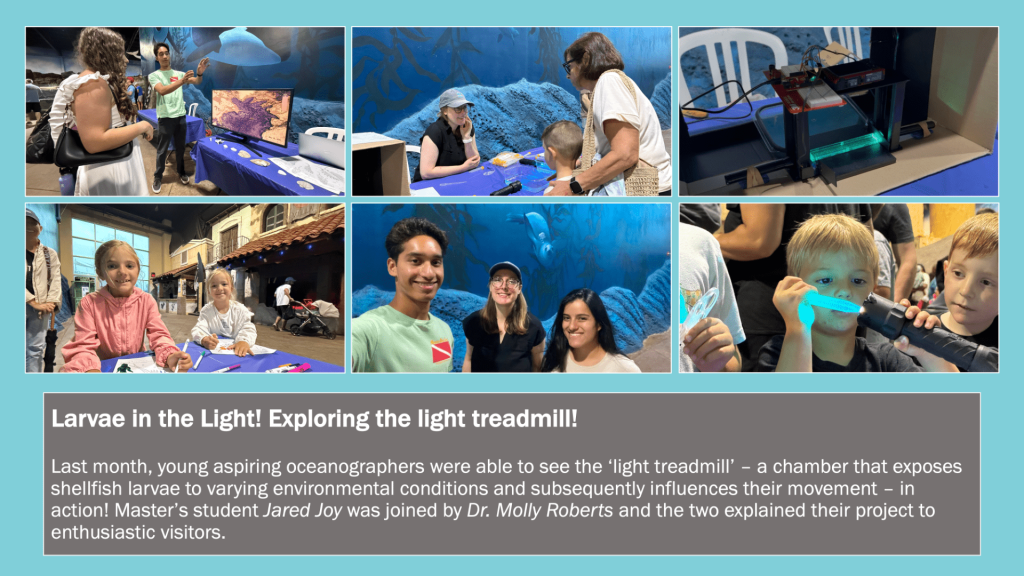
Most recently I’ve been visiting the Long Island aquarium for outreach! 🙂
 Molly Roberts